Loop jij voor op de Cyber-beveiligingswet ?
You don't fall under the Dutch Cybersecurity Act (Cyberbeveiligingswet, Cbw) yourself, but your biggest client does. And they're responsible for their entire supply chain, so the question eventually ends up with you.


650+ organizations helped
Free one-hour consultation
Always a dedicated consultant (coach)

Val je er zelf direct onder? Bekijk route A.
Waar sta je nu?

You haven't heard anything about it yet
Your next step
- See which questions to expect
- Write down what you already do with client data
- Record it somewhere (one document is enough)

There's a questionnaire and you're working out what to answer
Your next step
- Find out what's behind each question before you fill it in
- Cross out what doesn't apply to you, and explain why
- First answer what you already do; that's usually half of it

You send your answers back the same week
Then you're ahead. The next step is holding on to that lead: an ISO 27001 or NIS2 Supply Chain certificate means you never have to start on a questionnaire like this again. Sooner or later, that difference from competitors who do nothing will be felt commercially too.
Your next step
- Turn your answers into one document you can reuse
- Set a moment each quarter to update it
- Check whether a quality mark would save you the form-filling

Tien leveranciers krijgen dezelfde vragenlijst.
Negen moeten uitzoeken wat ze moeten antwoorden.
Eén heeft zijn antwoorden al klaar.
In plain language
Why does this affect you?
If you supply to an organization like that, the question gets passed on to you. Not because the law requires anything of you, but because your client has to be able to show it. Need more information? We're happy to explain.


“If you don't fall under the law directly, you may still have to deal with it through the supply chain. Large clients are going to ask their suppliers to prove that they work securely.”
Kilian Houthuijzen
Commercial Manager & Partner

This isn't a cost
Soon, your client will be choosing between suppliers who can answer and suppliers who can't. That's not a theoretical distinction: it comes back in tenders, in contract renewals and in the question of who's still on the list next year.
If your evidence is in order, you're not just kept on. You're sought after.
You don't have to do everything.
You do have to be able to answer.
What you must be able to do:

A practical plan
Explain how you handle your client's data
Explain how you handle your client's data
A practical plan
Show which measures you've taken
Explain how you handle your client's data
A practical plan
Describe what you do when things go wrong
Explain how you handle your client's data
A practical plan
Back up all three with something in writing
Explain how you handle your client's data

The route
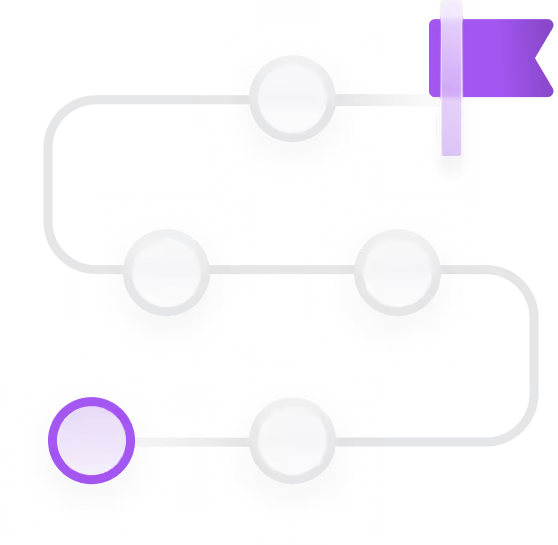
Every organization runs the same course.
But not everyone has the same obligations. Click a step to see what's asked of you.
01
Understand the client's question
What's actually being asked?
A questionnaire is usually a translation of what your client has to demonstrate themselves. If you know what's behind the question, you also know which answer will do.
02
Decide what's relevant
Not everything on that list is about you
A questionnaire is often set up broadly. For each question, decide whether it really concerns your service or product. Cross out whatever doesn't apply to you, with a short explanation of why.
03
Record and document
What you already do, and what still needs adding
Most suppliers do more right than they think. It's usually about three or four things that really still need adding. You don't need to come up with anything new; you need to write down what already happens.
04
Evidence
One document you can send straight away
Not a separate form filled in for each client, but one document you can send along with every request.
05
Maintain
So the next request is just a matter of updating
Half an hour per quarter is enough to keep up. The first time takes time; after that, (almost) none.
Tools & downloads
If it isn't written down, you haven't run it

Available now
Which questions will your NIS2 client ask?

Free download
Does my client fall under the Cbw?

Article
NIS2 Supply Chain: proof that your cybersecurity is in order
The most valuable tool is a no-obligation one-hour conversation
The role of Fendix
We help you get going. After that, you run on your own.


Letter of intent
Starting a project towards a framework or certificate? If you want to take part in a tender, we can issue a letter of intent. That way, you keep all the commercial advantages in the meantime.
A colleague, not an auditor
A dedicated consultant who adapts to your culture and tools. Remote or in the office, via Teams or Slack.
Guaranteed results
You know where you stand, what the deadline is and what it costs. We don't rest until it's demonstrably in order.
Frequently asked questions from suppliers
Will I be fined if I do nothing?
No. The Dutch Cybersecurity Act (Cyberbeveiligingswet, Cbw) isn't aimed at you, so there's no regulator that can fine you. What you do risk is your client choosing a different supplier.
My client is asking for ISO 27001. Am I obliged to have it?
No. An ISO 27001 certificate isn't a legal requirement anywhere. It is often the fastest route, though. If you have to document everything anyway and several clients are asking for proof, a certificate takes away a large part of the worry.
Will I get a call with a quote after this?
Only if you ask for one. If you book a time below, you'll get a no-obligation advice session. What you do with it is up to you.
What if I can't answer the questionnaire?
Then an honest answer with a plan is always better than a half-completed list. Clients don't expect perfection, certainly not in the early stages. What they do expect is a concrete plan; otherwise they'll go to the supplier who does have their house in order.











Grab a virtual coffee?
One hour.
Two cups of coffee